Performance dashboard
Helping traders self-diagnose and reduce support load
Redesigned CMC’s performance dashboard to shift from vanity metrics (win rate, P/L) to behavioural insight and coaching.

CMC Markets is a London-listed global online trading platform providing retail and institutional clients access to leveraged products including CFDs, spread betting, and FX across multiple asset classes.
Problem
Customer Problem
Tracking performance was a tedious, manual process. Traders struggled to distil complex trade data into meaningful insights and often didn’t analyse their behaviour consistently.
The dashboard showed results - but not patterns.
Business Problem
Customer retention averaged 11–12 months. Analysis showed many traders were liquidating accounts due to poor risk management and lack of behavioural awareness.
Low insight → Poor decisions → Account losses → Churn.
Product hypothesis
Offering customers a way to view their performance and understand what they are doing wrong, will improve their trading strategy and prolong their engagement with the platform - leading to increased profits for CMC Markets.
Solution
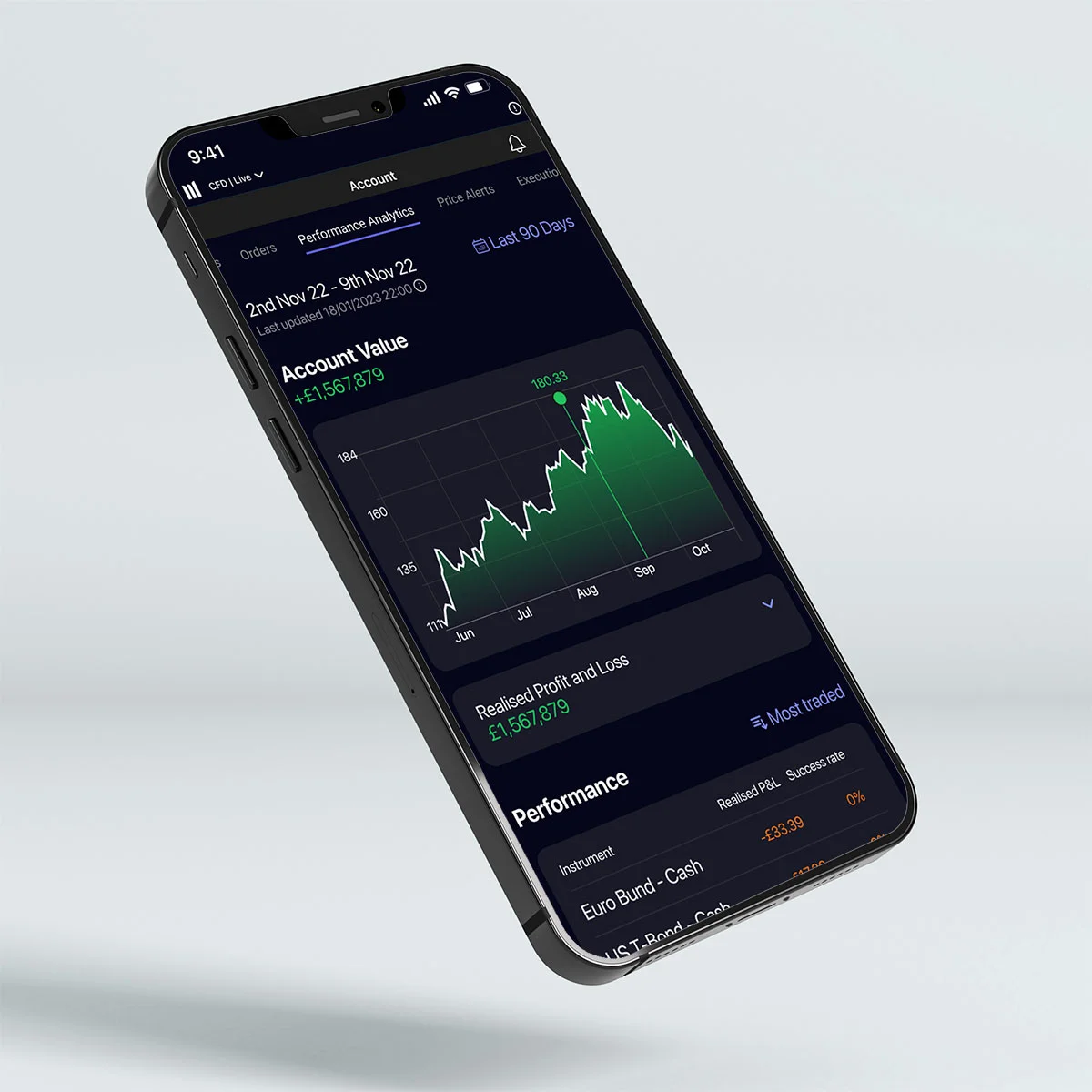
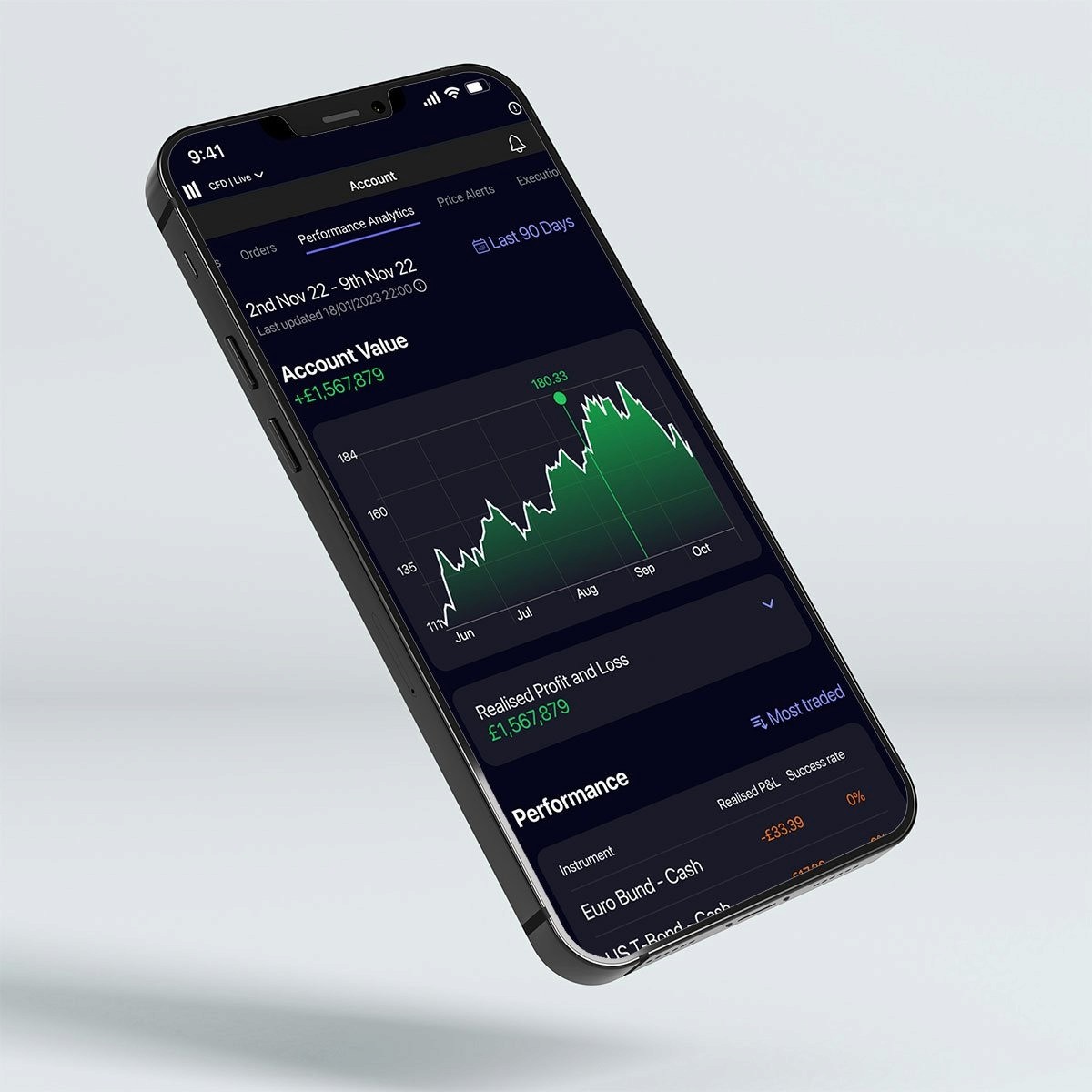
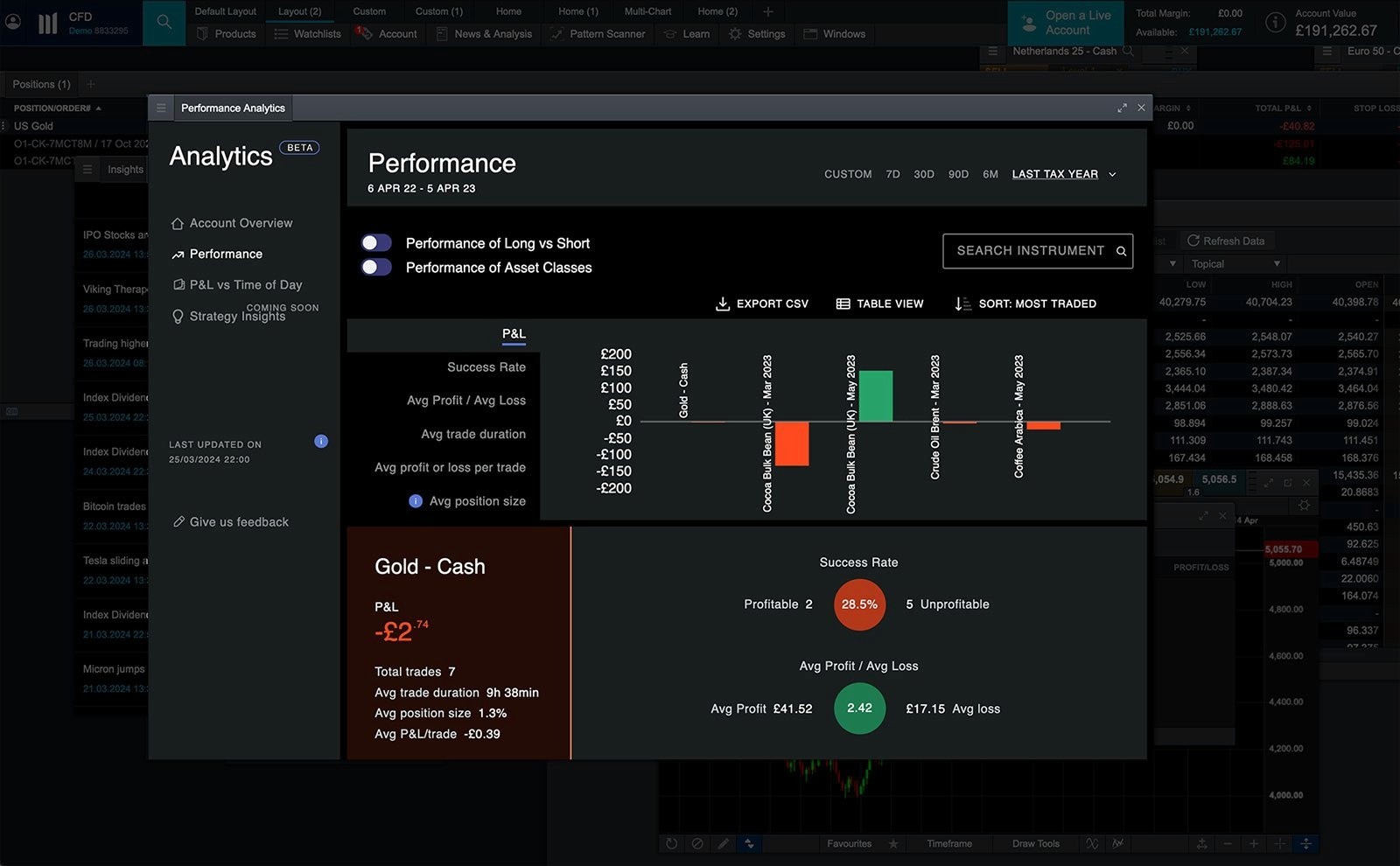
A dashboard that shows customers their stats across multiple time frames and instruments.
Approach
My role
Strategy
Discovery
User research
UI design
Usability testing
What I did
Analysed 100+ support tickets to identify recurring pain points.
Conducted 30+ discovery interviews (including open-ended questions and ranking exercise) across novice and experienced segments.
The main objective was to understand what metrics they track and what they focus on in understanding their performance.
Built 3 prototype iterations that used customers' actual past trading data - making feedbck much more genuine and intuitive.
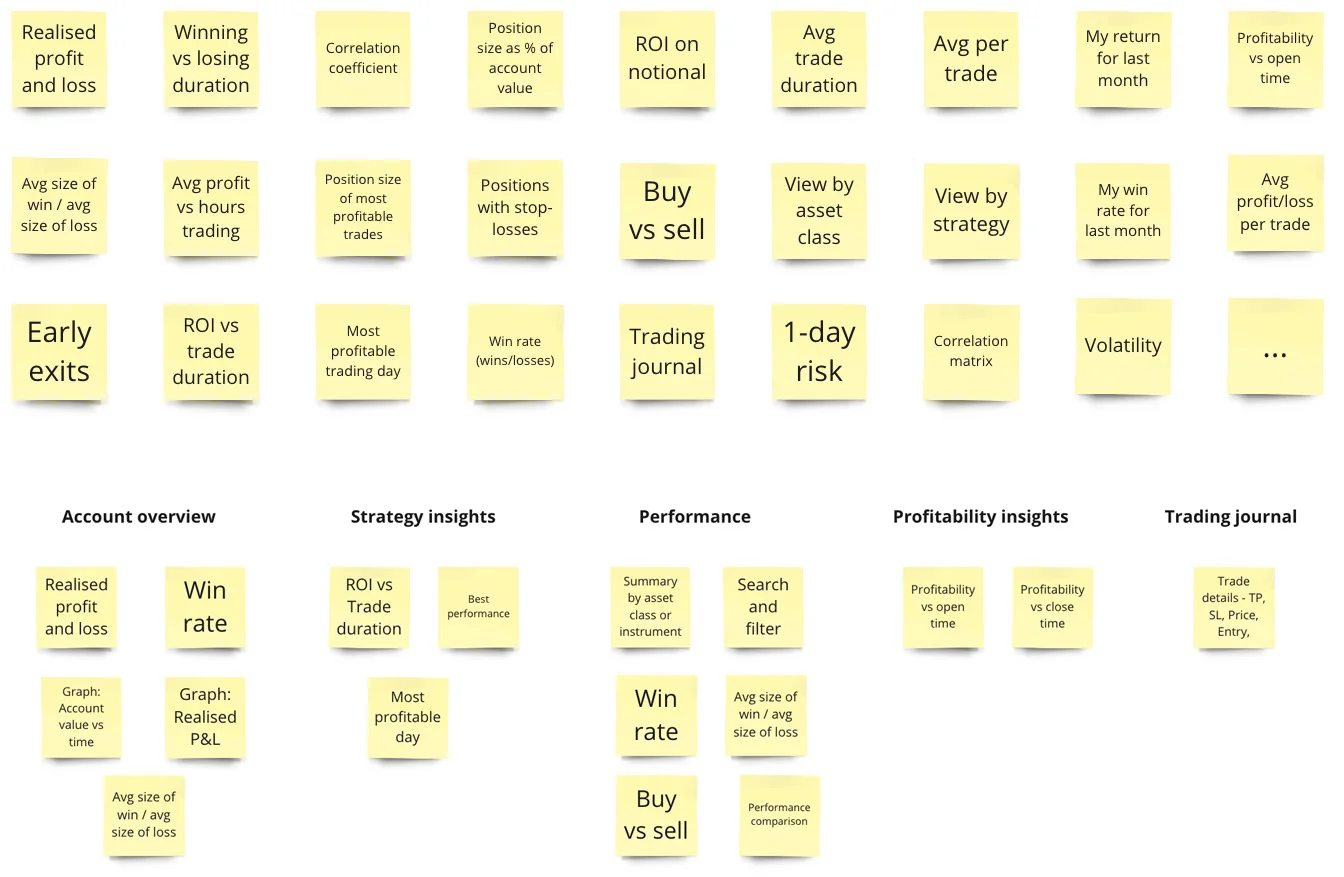
Information architecture research
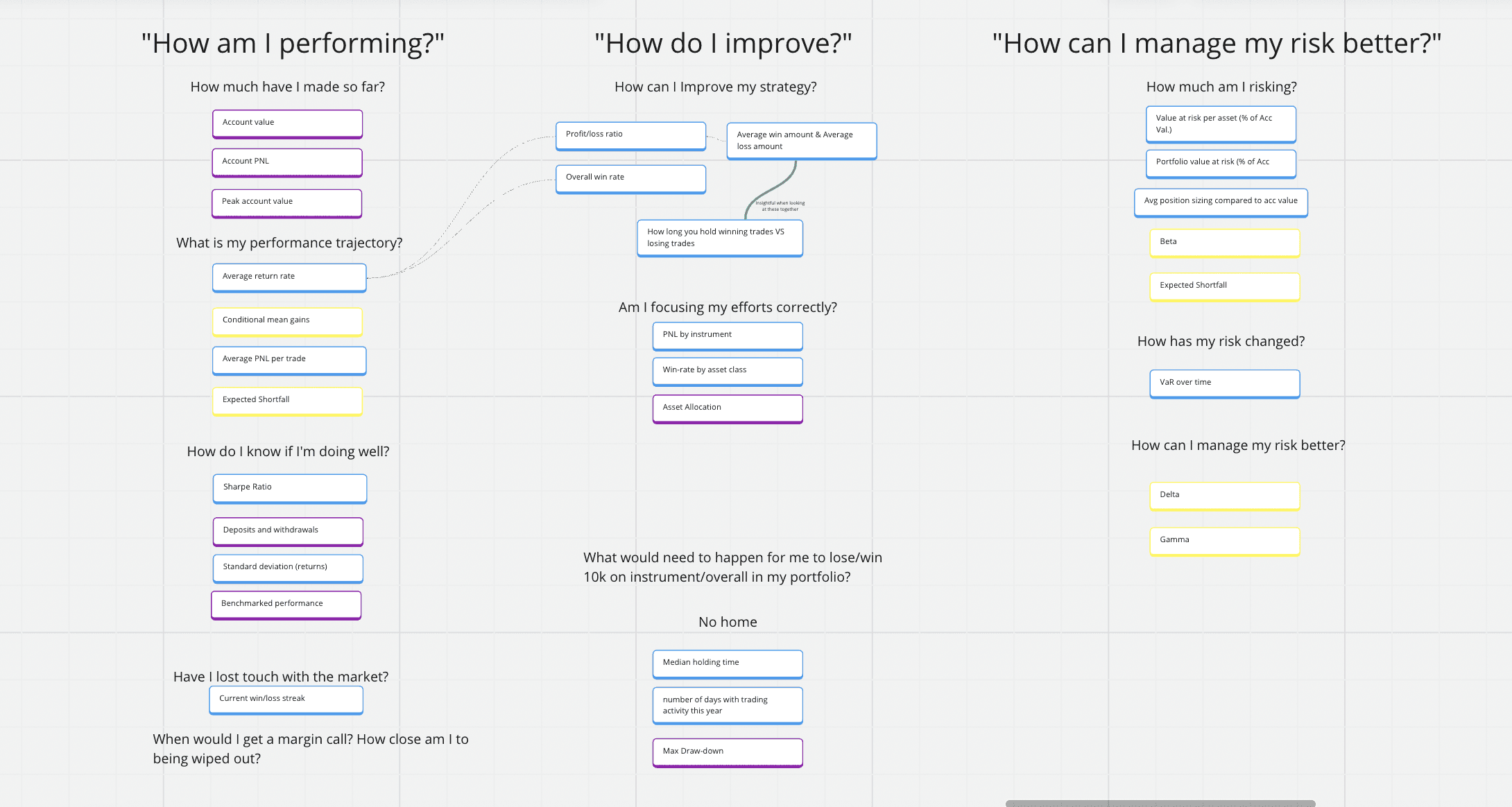
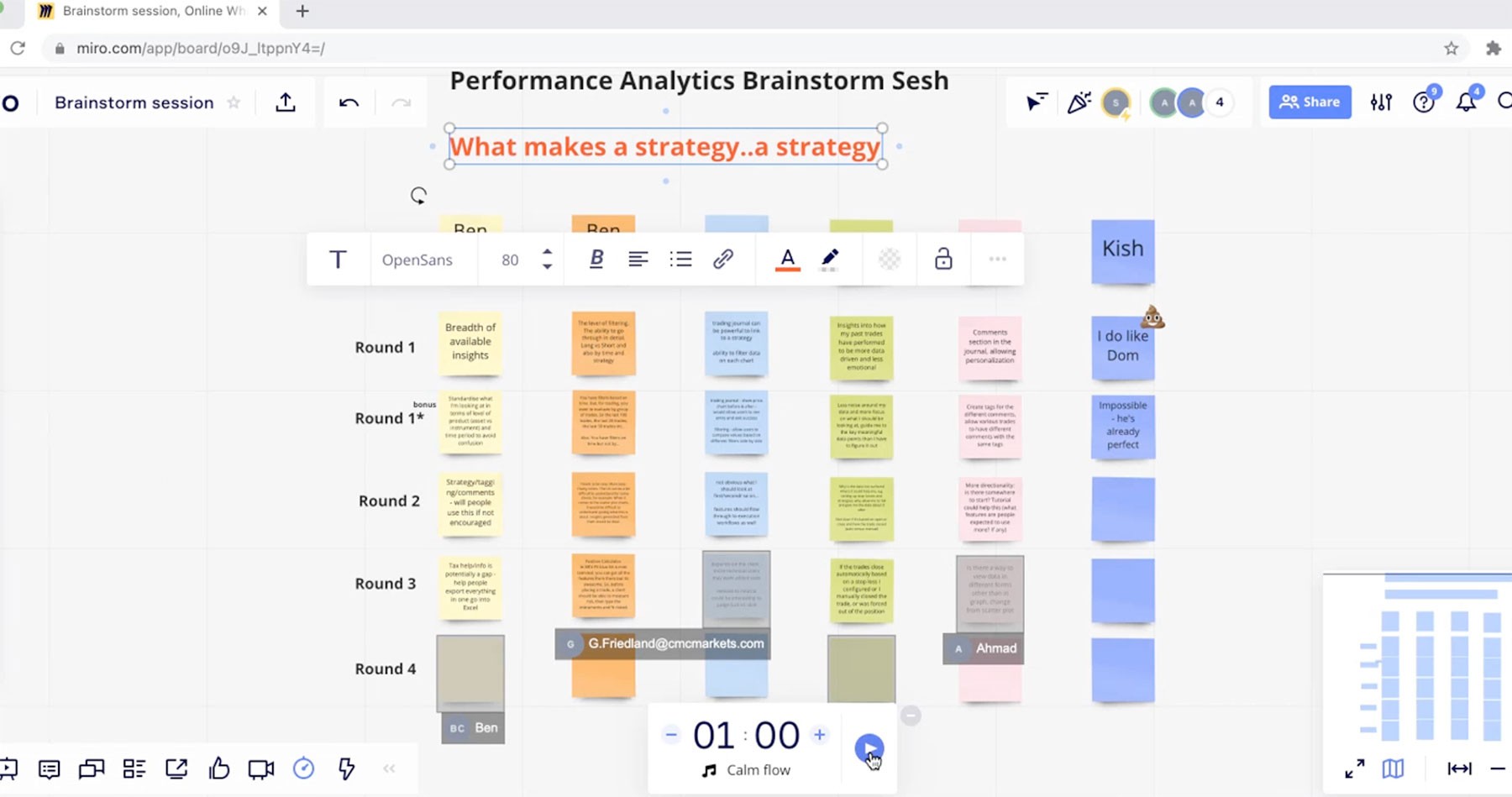
Brainstorming metrics
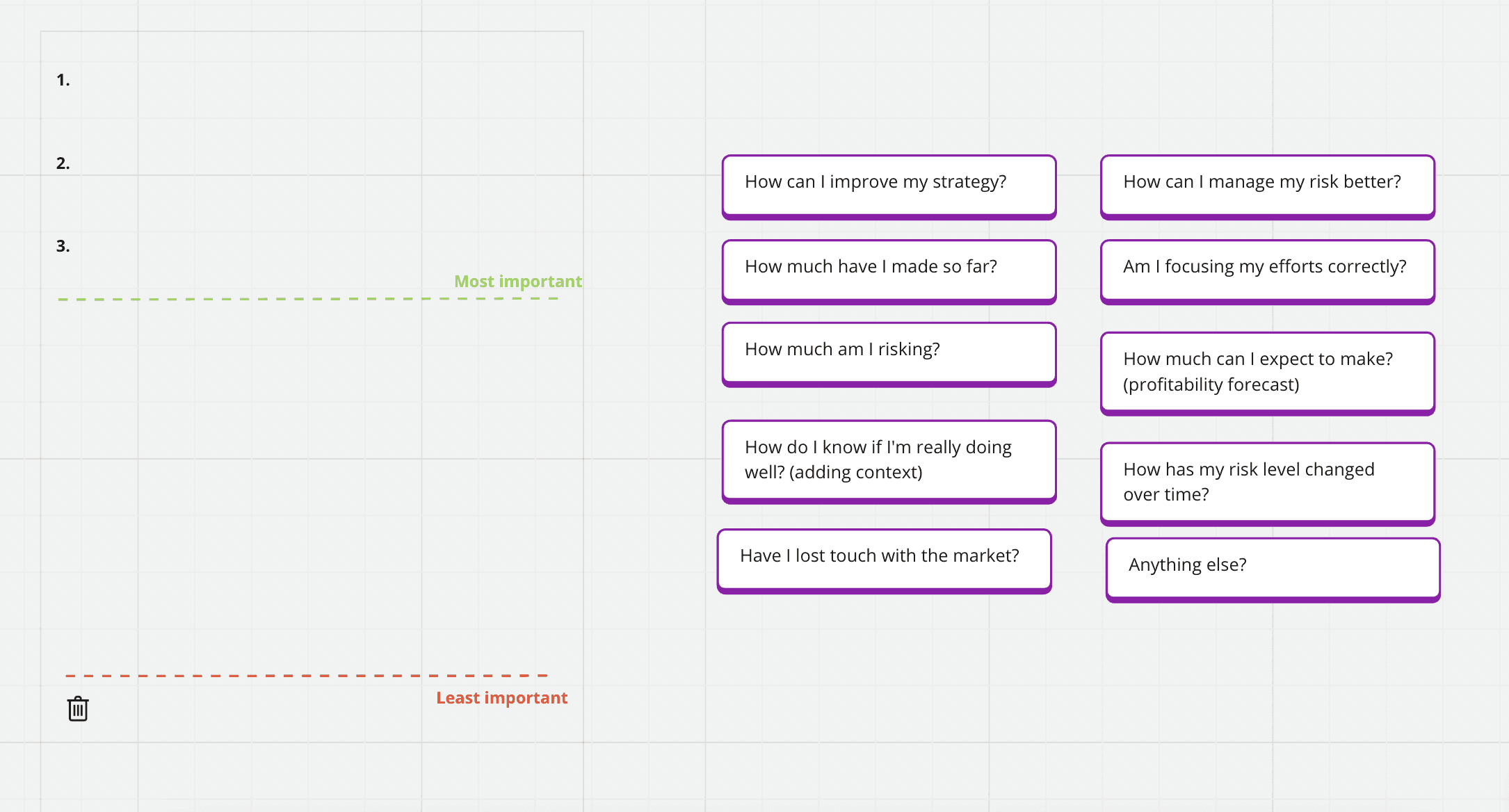
Stack ranking
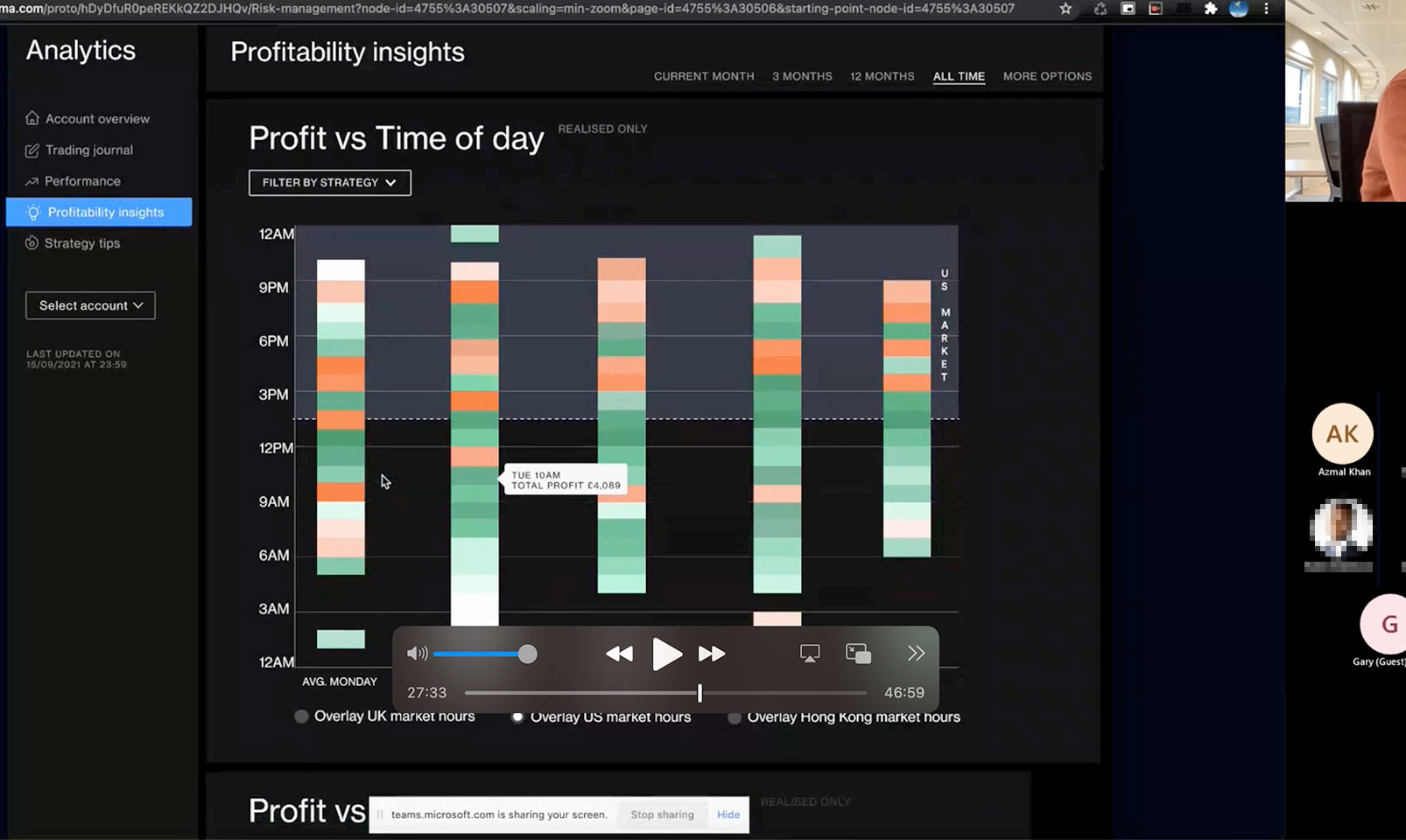
User interview
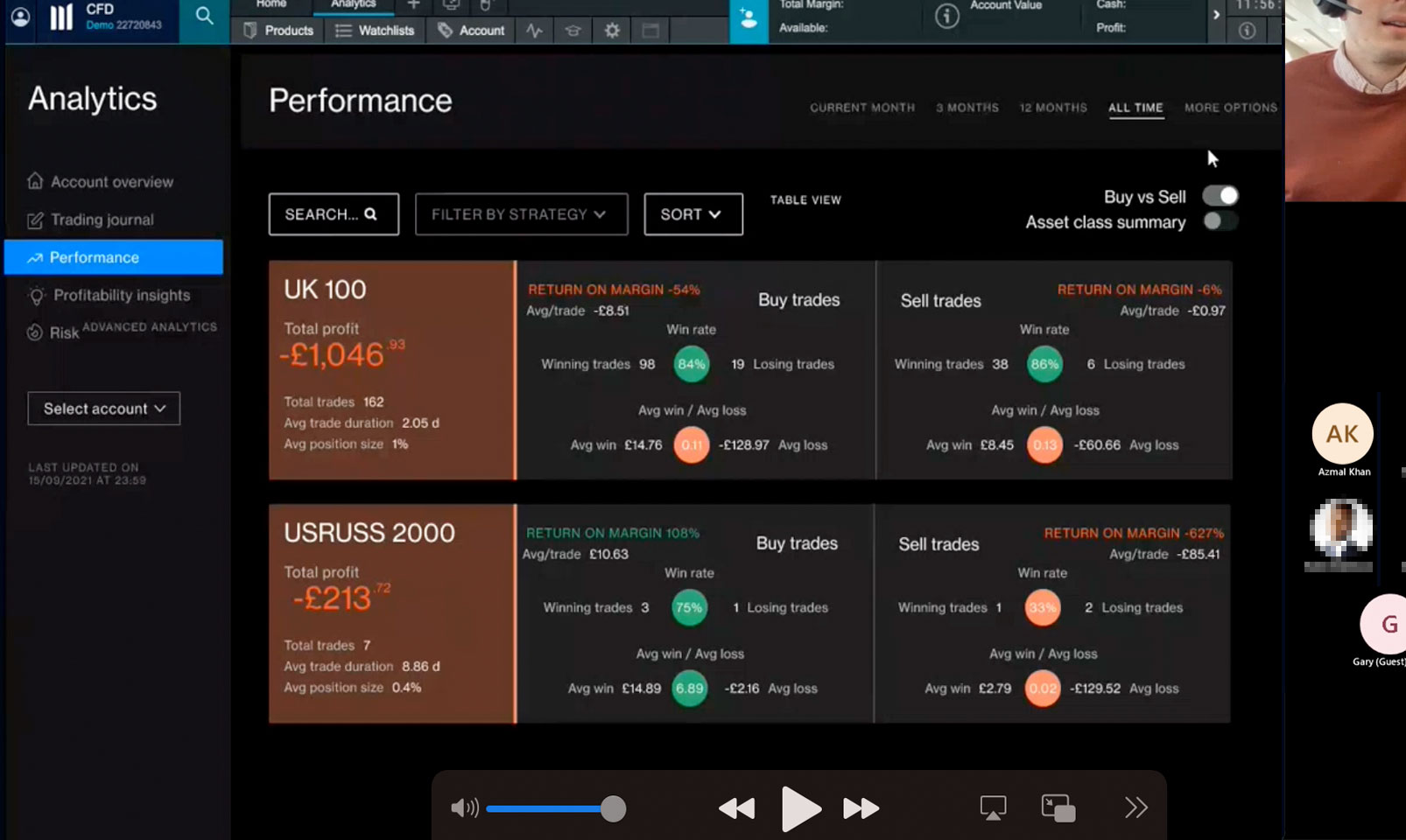
User interview
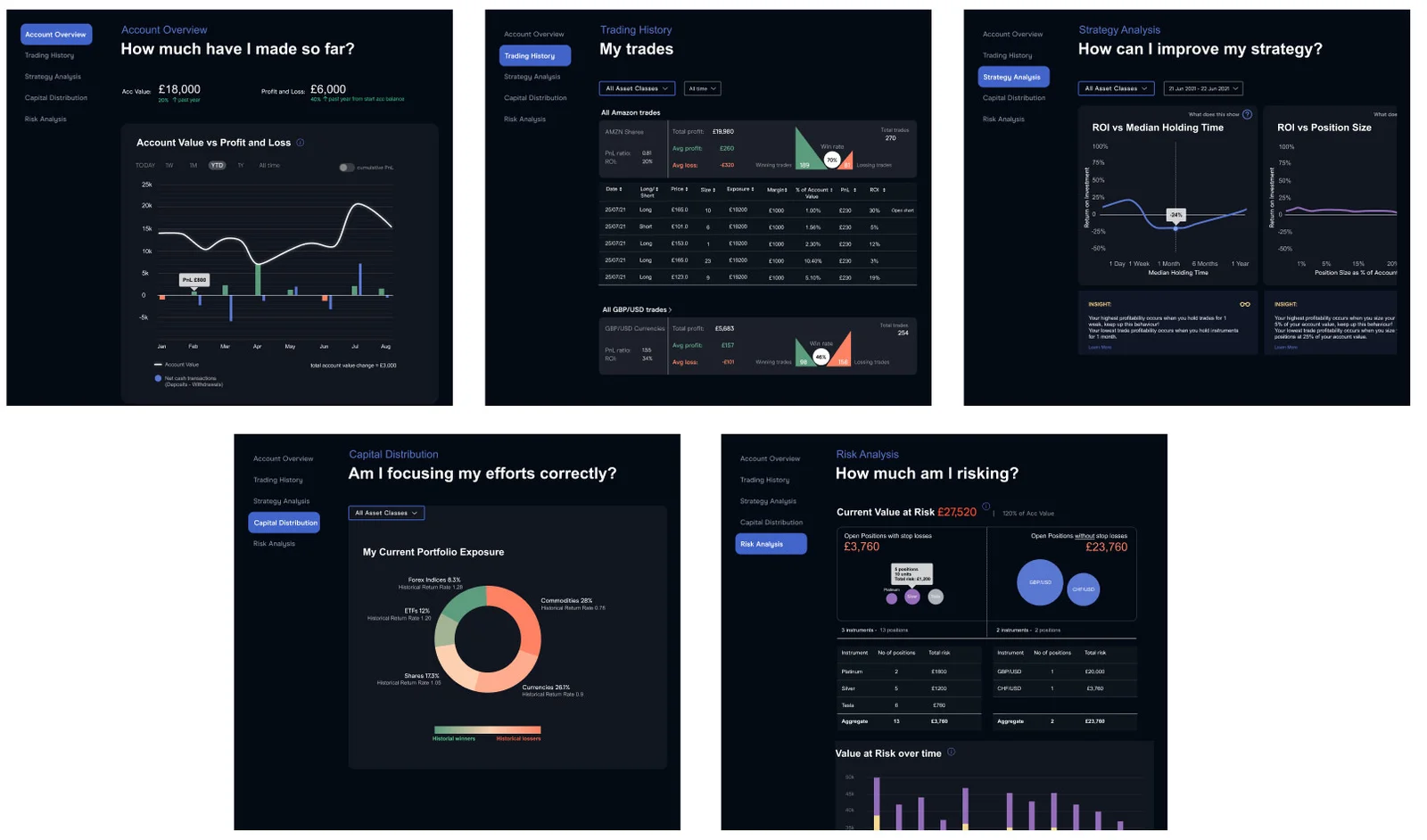
Design iteration
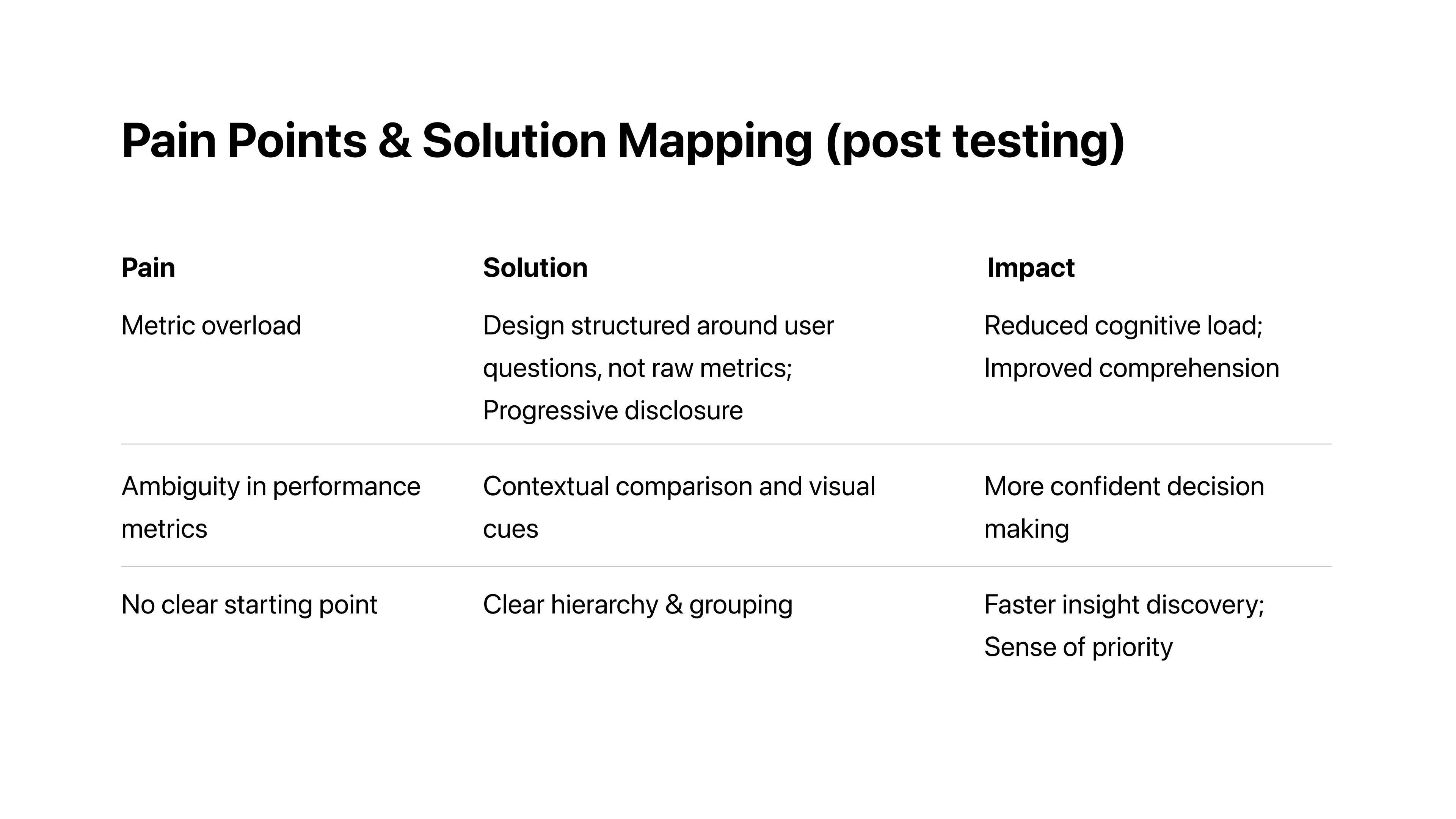
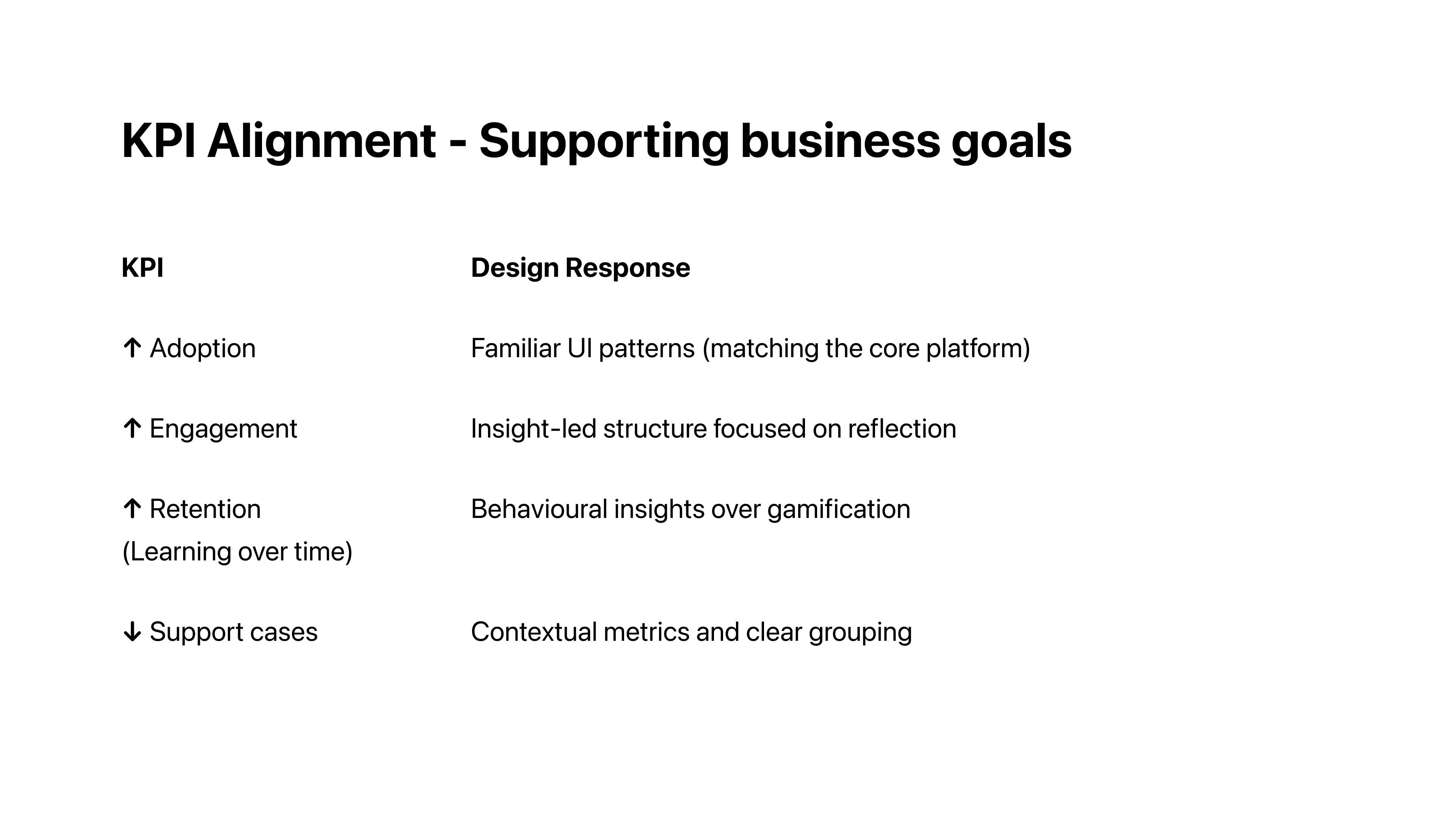
Key Product Decisions
Shift from reporting to coaching
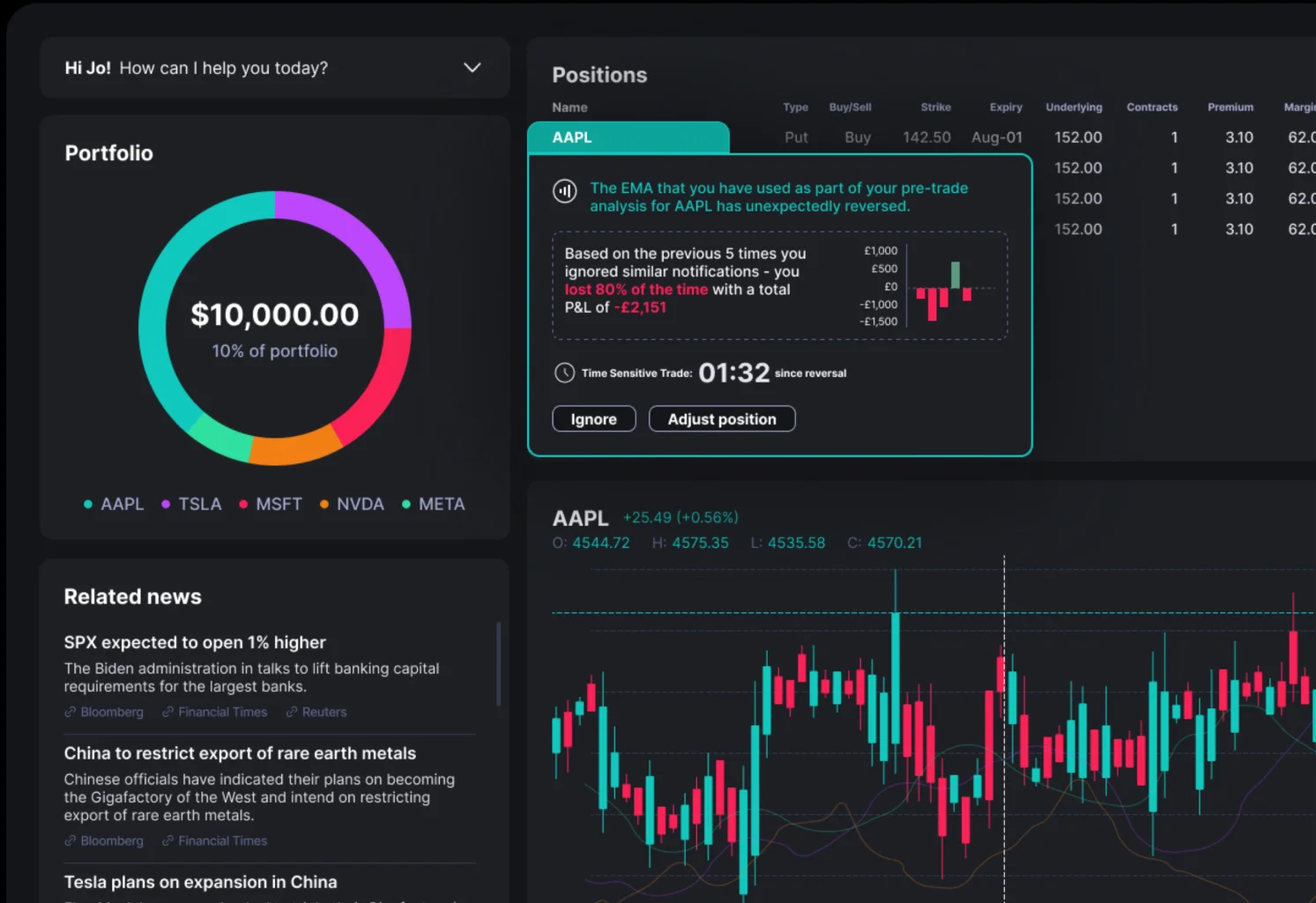
Rather than surfacing static metrics, I introduced behavioural nudges (e.g., “You tend to lose after 3 consecutive trades”) to encourage reflection and adjustment.Progressive density across devices
Mobile prioritised quick diagnosis and pattern recognition.
Desktop enabled deep analysis and time-frame comparison.Trader-native language over finance terminology
Rewrote performance explanations using language traders already use, reducing interpretation friction..
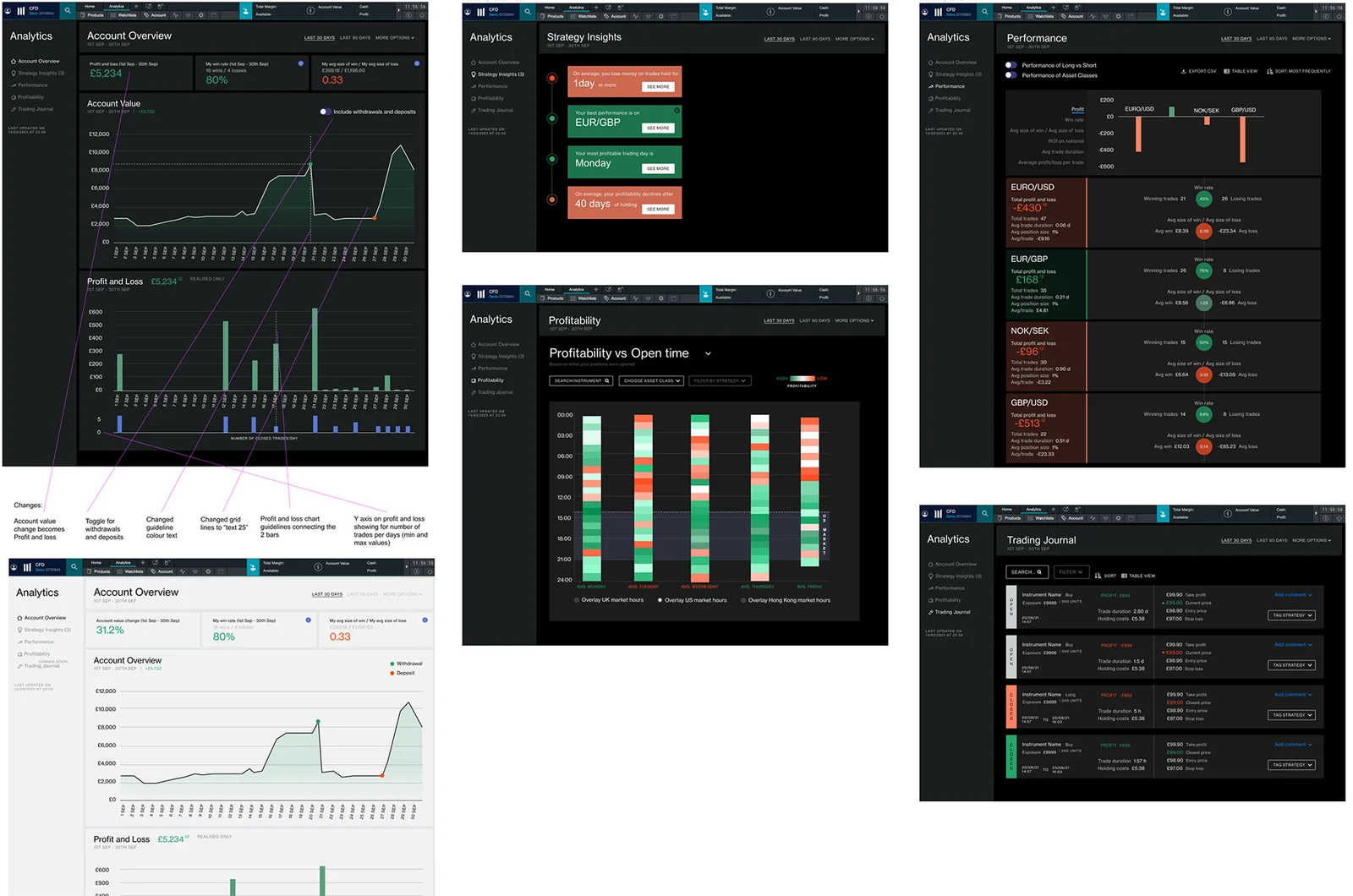
Result
Beta NPS 60+ (↑ from baseline 35).
Weekly active dashboard users ↑ 30%.
Support tickets on P&L queries ↓ 22%.
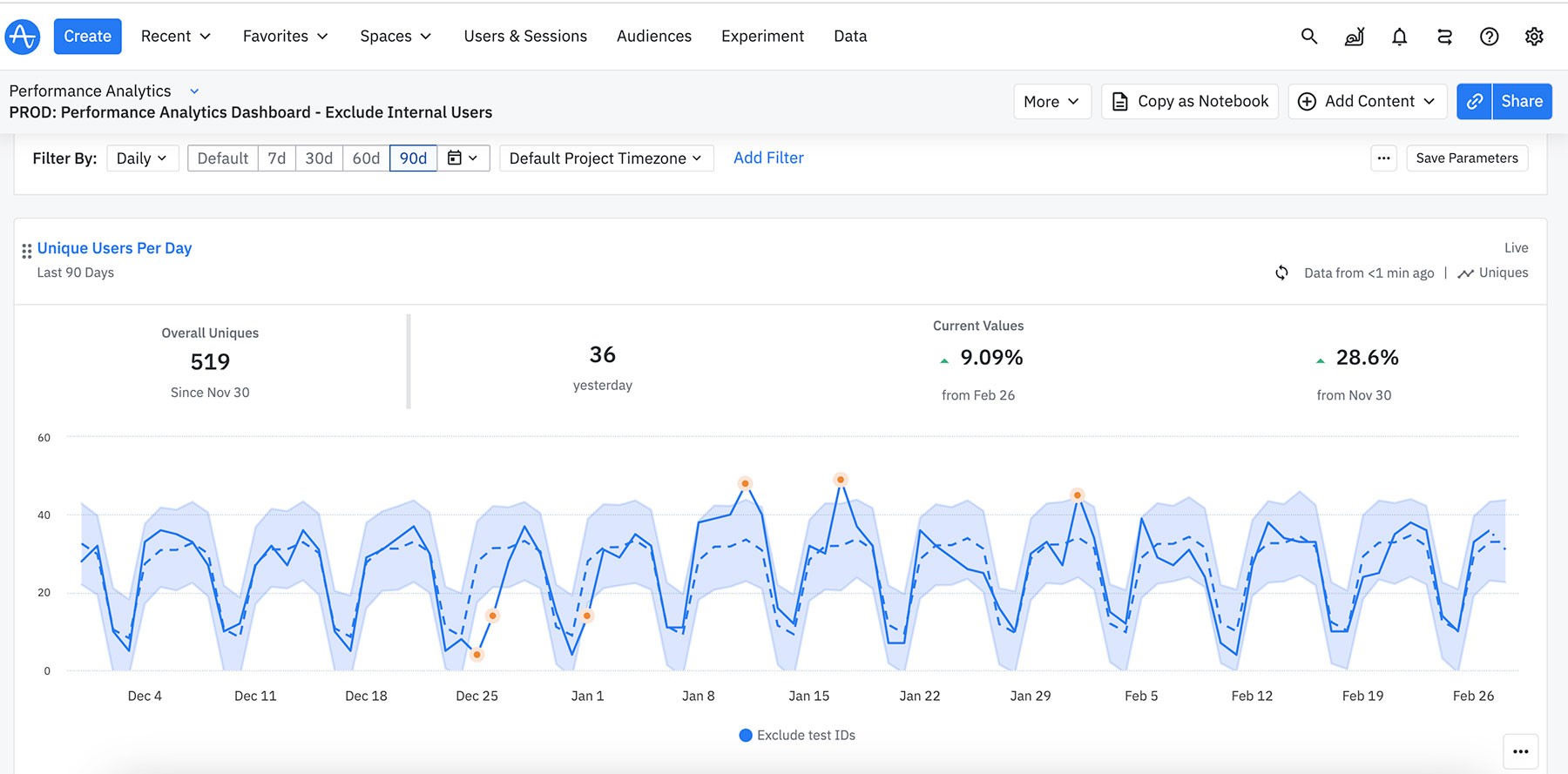
6 month post-launch shows consistent use of dashboard
My contribution
Sole designer on project: led research, prototyping, IA, UI patterns, and analytics instrumentation plan. PM drove roadmap, engineers built MVP.
Takeaways
Actionable insights > vanity stats - traders respond better to guidance.
Cross-team alignment is essential in fintech
Mobile design must follow user behaviour - not desktop parity